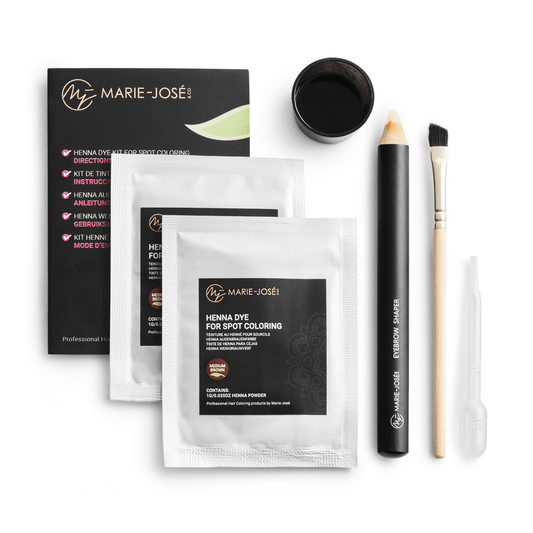
Mixing Eyebrow Henna: Master the Art of Color Blending
Mixing Eyebrow Henna is essential for any brow artist dedicated to creating perfect eyebrow tints for their clients. To achieve the desired effect, understanding how to blend different henna colors is crucial. With eight distinct henna colors available, the possibilities for mixing are extensive, tailored to meet each client's unique needs and preferences.
Understanding the Various Natural Shades of Our Henna Dye
- Blonde: Ideal for the lightest skin tones and hair colors, this shade provides a subtle tint. The pigment's lightness is dictated by the duration it stays on the skin and hair. If a lighter shade is preferred, shorter application time is advised. The hue can adjust warmer or cooler based on the client's skin tone. A hint of Light Brown can create a dark blonde effect, while adding a pinch of Chestnut Brown gives warmth.
- Grey Brown: This shade suits cooler tones, perfect for silver or ash-colored hair. It's excellent for mixing; adding a bit of Grey Brown to Light or Dark Brown cools these colors, while warm tones benefit from it when mixed with Blonde or Medium Brown.
- Light Brown: Recommended for blondes and brunettes or those with light skin tones, Light Brown works well to soften darker colors. Incorporating Grey Brown will yield a cooler, darker tint.
- Copper Brown: Perfect for redheads or as a mixer with Blonde and Brown shades. It delivers a warm reddish-brown hue, best combined with another color for intensity.
- Medium Brown: A balanced hue suitable for various Brunette tones. Ideal for Mediterranean skin types, it matches neutral brown needs without much mixing required. For more depth, add a dash of Grey Brown.
- Chestnut Brown: With warm reddish undertones, it's suitable for vibrant brunette shades. Just a touch of this can warm any color mix.
- Dark Brown: This rich chocolate shade works beautifully with dark hair colors and can be blended with Black henna for bold eyebrows.
- Black: The darkest shade, suitable for medium to dark skin tones and black hair. Mixing this with Light or Medium Brown can create a more subtle, ashy tone.

Start with a Consultation and Find the Right Henna Tone
Each client is unique, making it vital to understand their preferences, natural hair color, and desired look. Base colors like Black, Dark Brown, Medium Brown, and Light Brown can be categorized with warm tones (Copper and Chestnut Brown) and cool tones (Grey Brown, Blonde).
How to Mix Different Henna Colors
- Natural Look: Combine Medium or Light Brown with touches of Blonde or Grey Brown for a softer appearance.
- Rich Depth: A small amount of Black added to Dark Brown deepens the tone for a more dramatic effect.
- Warmth: Enhance with Chestnut or Copper Brown for vibrancy, particularly for warmer skin tones.
- Cooled Tones: Blend Grey Brown or Blonde with Light or Medium Brown for those with cooler undertones.

Practical Tips for Blending Henna Tint
- Test your mix on a small patch of skin or paper.
- Record the mixing ratios for consistency in future applications.
- Limit mixes to two colors to maintain simplicity.
- Use a pinch of your mixing color to avoid overpowering the base.
- Application time affects final color; lighter shades need less time.
- Henna cannot lighten brow hairs.
- Brow hair density influences the color intensity.
- Consider brow hair structure; stiffer hairs absorb color quickly.